
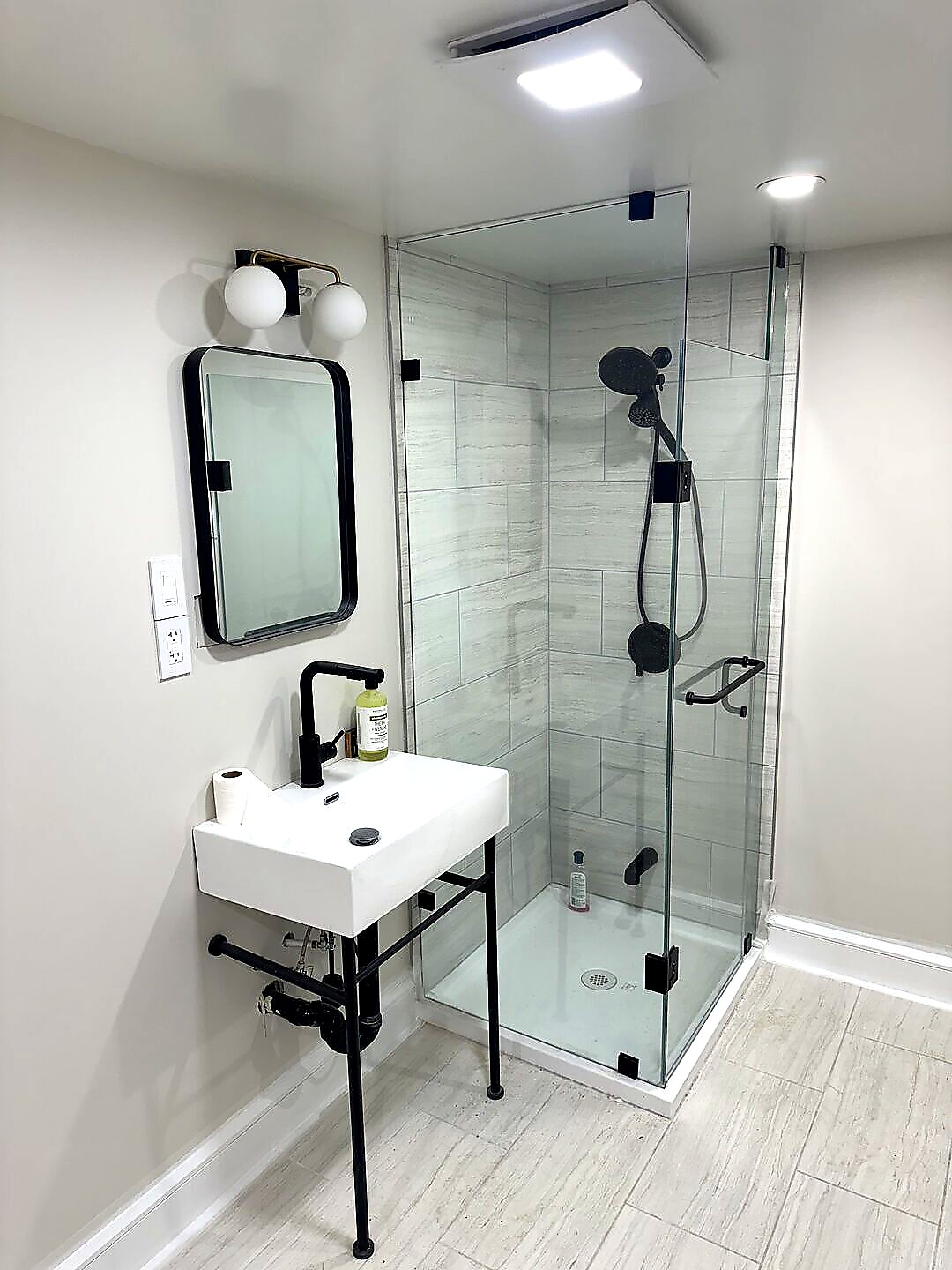
Toronto bathrooms grow mould for one of three reasons: undersized ventilation, missing waterproofing membrane behind tile, or a vent duct that terminates in the attic instead of outside.
Ventilation: size it by room volume
The Ontario rule of thumb — 80 CFM for bathrooms under 100 sqft, 110 CFM for larger or two-fixture baths. Add a humidistat or run-on timer (Panasonic WhisperGreen FV-0511VKL does this) so the fan keeps running after you leave the shower. Most mould we see was prevented entirely by upgrading the fan.
Waterproofing: behind the tile, not on it
Tile is not waterproof. Grout absorbs water. What protects your studs and subfloor is the membrane behind the tile — Schluter Kerdi or RedGard rolled-on. If a renovator quotes you a bathroom without showing the membrane install, they’re not waterproofing the room.
Where the duct actually goes
About a third of GTA homes we inspect have a bathroom fan that vents into the attic. That’s where the mould lives. Ducts need to terminate through a roof cap or sidewall exterior — flexible insulated duct, taped joints, with a damper at the exit point to prevent backflow in winter.
Maintenance that actually works
Run the fan during every shower and for 20 minutes after. Wipe shower walls with a squeegee once a week (cuts mould food source 80%). Reseal grout lines annually with a penetrating silicone-based sealer. If you see mould on grout that won’t scrub off, the membrane behind probably failed — call us before the floor goes soft.